
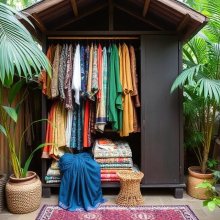
Creating a home wardrobe in Kerala isn't just about stashing clothes; it's an exercise in harmonizing with a unique environment and lifestyle. The state's intense tropical climate, distinct architectural styles (often featuring concrete walls), and rich cultural attire demand thoughtful planning. Here’s what to prioritize for a wardrobe that’s functional, durable, and truly Keralite:
1. Conquering the Climate: Humidity is Enemy #1
Material Matters: Avoid MDF and particle board like the plague. They swell and disintegrate in Kerala's humidity. Opt for:
Marine Plywood: The gold standard. Treated to resist moisture and termites. Ensure it's high-grade and properly sealed at edges.
Teak Wood: Naturally resistant to moisture and pests. Durable and beautiful, but expensive. Engineered wood options specifically treated for humidity can be a mid-range alternative.
Bamboo: An emerging, sustainable option with good moisture resistance if properly treated.
Ventilation is Vital: Stagnant air breeds mold and mildew.
Breathable Backing: Avoid solid plywood backing. Use a breathable membrane (like non-woven fabric) or leave a small air gap between the wardrobe and the wall.
Strategic Vents: Incorporate discreet ventilation holes (covered with mesh to prevent dust) at the top and bottom of doors or side panels to allow air circulation.
Dehumidifier/Dampproofing: Consider silica gel dehumidifiers or moisture-absorbing bags inside, especially during monsoons. Applying a dampproof coating on the wall before installation is wise.
Finishing Touches: Use high-quality, moisture-resistant laminates, veneers, or paints. Ensure edges are perfectly sealed. Avoid melamine finishes on cut edges.
2. Designing for Kerala's Wardrobe & Lifestyle
Accommodating Ethnic Wear: Kerala wardrobes hold more than jeans and t-shirts.
Extra-Deep Shelves: Sarees (mundu/neriyathu for men and women) need significant folding space. Shelves should be at least 20-22 inches deep.
High-Hanging Rods: Traditional Kasavu sarees and long dresses require generous hanging height. Ensure rods are placed high enough (often needing 70+ inches clearance).
Specialized Rods: Consider "churidar rods" – rods set higher than standard for hanging lengthy outfits without them pooling on the base.
Jewelry & Accessory Storage: Dedicate shallow, felt-lined drawers or compartments with dividers for traditional gold jewelry, often an integral part of the Kerala wardrobe.
Maximizing Space in Varied Sizes: Kerala homes range from compact apartments to spacious villas.
Floor-to-Ceiling: Utilize vertical space fully. Tall units maximize storage in smaller rooms.
Customized Interiors: Avoid generic shelving. Design based on your clothing mix – more hanging for formals, deeper shelves for linens/sarees, specific drawers for mundus or accessories.
Corners & Awkward Spaces: Consider L-shaped designs or clever corner units to fit wardrobes into typical Kerala room layouts. Pay attention to wall protrusions (like dado edges) during measurement.
Accessibility & Organization:
Pull-Out Trays/Racks: Excellent for folded mundus, bedsheets, or accessories, allowing easy access to the back.
Full-Extension Drawer Slides: Essential for deep drawers – no more digging to the back.
Adjustable Shelving: Allows flexibility as storage needs evolve.
3. Structural Integrity & Installation
Solid Anchoring: Kerala's concrete walls require robust fixing. Use high-quality wall plugs (like chemical anchors for heavy loads) and ensure the carpenter secures the carcass firmly at multiple points, especially the top. Loose units are dangerous.
Sturdy Carcass & Framing: The internal framework must be robust to handle the weight of packed shelves, particularly when filled with heavy cotton sarees and linens. Reinforce shelves adequately.
Quality Hardware: Hinges, drawer slides, and handles bear constant use. Invest in branded, heavy-duty hardware (e.g., Blum, Hettich, or equivalent quality) that can withstand humidity and frequent operation. Soft-closing mechanisms are a worthwhile luxury.
Level & Plumb: Imperative for doors to function correctly and look good. Professional installation is highly recommended.
4. Aesthetics Blending with Kerala Homes
Style Synergy: Match the wardrobe's look (shutters, finish) to the room's overall aesthetic – whether it's modern minimalist, traditional Kerala woodwork, or contemporary.
Color Palette: Lighter colors (whites, creams, light woods) can make smaller Kerala bedrooms feel more spacious and reflect heat. Darker woods offer a rich, traditional feel.
Shutter Choice: Consider mirrored shutters to enhance space perception. Louvered doors offer excellent ventilation but can let in dust. Solid shutters are classic and protective.
5. Long-Term Protection
Termite Proofing: Non-negotiable. Ensure the wood is pre-treated. Apply chemical termite treatment to the wall cavity and surrounding area before installation. Regular inspections are wise.
Mold/Mildew Prevention: Combine ventilation strategies with periodic cleaning using vinegar solutions or commercial anti-fungal cleaners. Keep the wardrobe interior dry.
Dust Management: Kerala dust is pervasive. Well-sealed shutters and regular cleaning are essential.
Conclusion:
Building a wardrobe in Kerala requires foresight beyond basic storage. It demands a battle plan against relentless humidity, respect for cultural attire, and smart utilization of often unique spaces. By prioritizing moisture-resistant materials like marine ply, ensuring relentless ventilation, designing deep shelves and high rods for sarees and mundus, anchoring securely to concrete walls, and investing in termite-proofing and quality hardware, you create more than just storage. You craft a durable, functional, and harmonious element of your Kerala home, designed to protect your belongings and serve your lifestyle gracefully for years to come. Remember, in Kerala, a well-planned wardrobe is an investment in both practicality and peace of mind.