
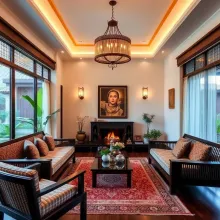
Kerala, often called “God’s Own Country,” is renowned for its backwaters, lush greenery, and rich cultural heritage. But beyond its natural beauty, Kerala also boasts a distinctive architectural and interior design style that reflects its history, climate, and deep-rooted traditions. Authentic Kerala home interiors are a harmonious blend of functionality, aesthetic grace, and cultural symbolism. Here's a look into the key elements that define Kerala-style interior decorations and how you can bring that timeless charm into your home.
1. Traditional Wooden Elements
Wood is the soul of Kerala interiors. Traditional homes, especially the Nalukettu houses, are characterized by the generous use of teak, rosewood, and jackfruit wood in their structural and decorative components.
Ceilings and columns often feature intricately carved wooden panels.
Furniture is usually handmade, with classic designs such as the charupadi (traditional wooden bench with a backrest), wooden swings, and high-back chairs.
Wooden room dividers or jali screens add both privacy and visual appeal.
The warm tones of polished wood not only bring elegance but also withstand Kerala's humid climate when treated properly.
2. Courtyards and Open Spaces
A defining feature of authentic Kerala homes is the inner courtyard, known as the nadumuttam. This open-to-sky space serves as a source of natural light and ventilation.
While modern homes may not always accommodate a full courtyard, the essence can be captured by:
Creating an atrium or skylight in the living area.
Using potted plants, water features, or hanging lamps to mimic the central openness.
Keeping living spaces clutter-free to promote a sense of openness and connection to nature.
3. Ethnic Art and Decor
Kerala interiors are incomplete without their unique art and craft traditions. Decorations are not just ornamental but deeply symbolic.
Mural paintings featuring mythological stories or nature themes adorn walls or canvas.
Brass lamps (Nilavilakku) and Uruli bowls filled with flowers or floating candles are used in entryways or pooja rooms.
Kathakali masks, Nettipattam (elephant caparison), and handwoven coir mats reflect cultural pride.
Using these elements in moderation adds character and cultural depth without overwhelming the space.
4. Natural Color Palettes
The color scheme of authentic Kerala homes is inspired by nature. You’ll see:
Earthy tones like terracotta, beige, cream, and off-white dominating walls and flooring.
Deep wooden hues from furniture and ceilings creating contrast.
Splashes of green from indoor plants and bright accents from traditional fabrics.
This palette not only keeps the home looking cool and fresh but also reflects a serene, grounded lifestyle.
5. Functional Simplicity with Cultural Touches
Kerala interior decoration leans towards minimalism with meaning. Every piece has a purpose, and every corner often tells a story.
Handwoven cotton curtains, often in off-white with golden borders, enhance natural light and simplicity.
Pooja rooms are common and decorated with devotion and subtlety, using bronze idols and fresh flowers.
Windows and doors are often wide and strategically placed for ventilation, often fitted with wooden shutters.
Functionality never comes at the cost of aesthetic appeal.
Conclusion
Kerala's authentic home interior decoration is not just about visual beauty—it’s a way of life that respects nature, celebrates culture, and values craftsmanship. Whether you're building a new home or redecorating an apartment, incorporating these traditional elements can transform your space into a serene, elegant haven with timeless appeal.
Let me know if you'd like images or a modern adaptation of this style for apartments or small homes.