
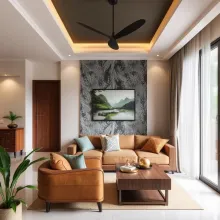
When planning home interiors in India, there are unique cultural, climatic, and practical factors to consider. Here are the top 5 things to care about:
1. Climate-Suitable Materials
India’s climate varies, but many regions deal with heat, humidity, or dust. Choose materials accordingly:
Flooring: Vitrified tiles, marble, or natural stone for cooling in hot regions.
Woodwork: Use termite-resistant wood like teak or engineered wood with proper treatment.
Fabrics: Opt for breathable materials like cotton and linen in upholstery and curtains.
2. Functionality & Space Optimization
Indian homes often host extended families, so multi-use spaces and storage are essential:
Modular furniture: Foldable dining tables, sofa-cum-beds.
Storage: Use lofts, under-bed drawers, built-in wardrobes.
Ventilation: Design for cross-ventilation and natural light.
3. Vastu Compliance (Optional but Common)
Many homeowners follow Vastu Shastra principles:
Kitchen in the southeast.
Master bedroom in the southwest.
Main door orientation and room colors are also considered.
4. Local Aesthetic & Cultural Elements
Incorporate regional style to make your home feel authentic:
Jaipur: Blue pottery, carved wood.
Kerala: Wooden ceilings, cane furniture.
Contemporary Indian: Blend traditional elements like jharokhas or brass decor with modern layouts.
5. Budgeting & Choosing the Right Contractor
Many interior projects go over budget due to poor planning:
Create a detailed budget with buffer (10–15%).
Hire reliable professionals with good reviews.
Ask for BOQs (Bills of Quantities) and 3D renders before starting.
If you'd like, I can help tailor ideas for a 2BHK, villa, or any specific city or style (minimalist, boho, traditional, etc.).
You said:
ChatGPT said:
Here’s a 555-word article on “Top 5 Things to Care When Doing Home Interiors in Kerala”:
Top 5 Things to Care When Doing Home Interiors in Kerala
Designing home interiors in Kerala is a unique journey that blends timeless tradition with modern sensibilities. The lush greenery, humid tropical climate, and rich cultural heritage of the region all play a significant role in shaping how homes are styled and built. Whether you're revamping an ancestral house or designing a modern villa, here are the top five things you must care about when planning home interiors in Kerala.
1. Choose Climate-Appropriate Materials
Kerala's humid and rainy weather demands careful material selection. Homes here often face moisture-related challenges like mold, termite attacks, and material warping. To counter this:
Use moisture-resistant plywood and marine-grade wood for cabinetry and furniture.
Opt for natural stones like laterite or terracotta tiles for a breathable, earthy flooring solution.
Avoid wall-to-wall carpeting; instead, use washable cotton rugs or mats.
Ensure that ceiling materials are heat-resistant, especially if you're using a sloped roof design.
Proper ventilation and materials that can withstand high humidity will help extend the life of your interiors.
2. Embrace Traditional Kerala Architecture
Kerala homes are globally admired for their architectural elegance—steep sloping roofs, wooden ceilings, and internal courtyards. Integrating such traditional elements can give your interiors a timeless appeal:
Incorporate wooden paneling, jali (lattice) designs, or traditional thulasis (pillars).
Use cane or rattan furniture that resonates with local craftsmanship.
Decorate with brass lamps (nilavilakku), mural paintings, or Kathakali masks for a cultural touch.
Consider an open courtyard or a Nalukettu-style layout if space allows.
Blending these elements with modern aesthetics will give your home a rooted yet contemporary feel.
3. Plan for Ample Natural Light and Ventilation
Kerala homes thrive on open, breezy designs. With frequent rain and high humidity, it’s essential to keep air flowing and light streaming in:
Opt for large windows with mosquito mesh, skylights, and verandahs to allow in light and fresh air.
Use light-colored curtains or sheer drapes to maintain brightness without heating up the space.
Make sure your design facilitates cross-ventilation, especially in bedrooms and kitchens.
Good ventilation keeps the home cool, reduces mold growth, and lowers energy bills.
4. Smart and Space-Saving Furniture
Modern homes in Kerala are often built on compact plots, especially in urban areas. Interior design should prioritize utility:
Choose modular furniture with in-built storage.
Use vertical space with tall cabinets or open shelves.
Consider foldable or multipurpose pieces like a sofa-cum-bed or a wall-mounted study table.
In kitchens, go for modular units with waterproof finishes and easy-to-clean surfaces.
Functionality is key to maintaining a clutter-free, comfortable home environment.
5. Balance Budget with Quality Workmanship
Kerala has a rich tradition of skilled artisans and carpenters. Instead of rushing to finish, invest in quality workmanship:
Set a realistic budget and keep a buffer of at least 15% for unexpected costs.
Always check references and visit past projects before hiring contractors.
Use 3D renders or layout plans to visualize the final look before execution.
A well-executed interior design not only looks good but also lasts for years.
Conclusion
Designing home interiors in Kerala requires a delicate balance between climate adaptability, cultural expression, and modern functionality. By paying attention to these five aspects, you can create a living space that is beautiful, durable, and uniquely Keralite.
Let me know if you'd like a version tailored for a specific city like Kochi or a house type like a villa or apartment.